Wooden Gifts Tutorial: How to Carve Pockets and Clothing Layers on Figurines
Hi everyone, this is Wooden Smile! We guide you through how to handcraft beautiful wooden gifts — and in today’s carving tutorial, we’ll show you how to sculpt realistic pockets and clothing folds on a wooden figurine for a polished, lifelike result.
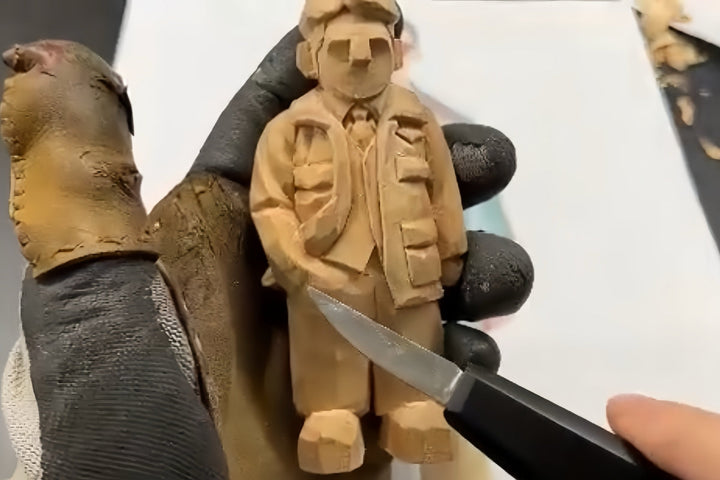
Let’s use the figurine we’re working on as an example — its outfit includes several pockets. First, we mark the pocket positions. Using a reference image, draw the outlines of the pockets on the wood block with a pencil.

Now we begin carving the pockets. Watch the cutting motion carefully. Sometimes a line that could be made in one go looks more natural if split into two light cuts. Dividing the line into two passes adds subtle surface planes, giving the pocket a “flipped up” appearance — a small trick that greatly improves realism in your wood carving figures.

Apply the same carving method to the rest of the pockets. Note that all the pockets are turned upward: the top edge should be carved lightly — just a faint seam line — while the bottom edge must go deeper to enhance the illusion of a turned‑up pocket.

Once the “flipped‑pocket” detail is carved, the clothing on that side already has plenty of complexity — avoid adding more folds or wrinkles, or it will look messy and overworked. Less can sometimes be better when crafting a wooden figurine.
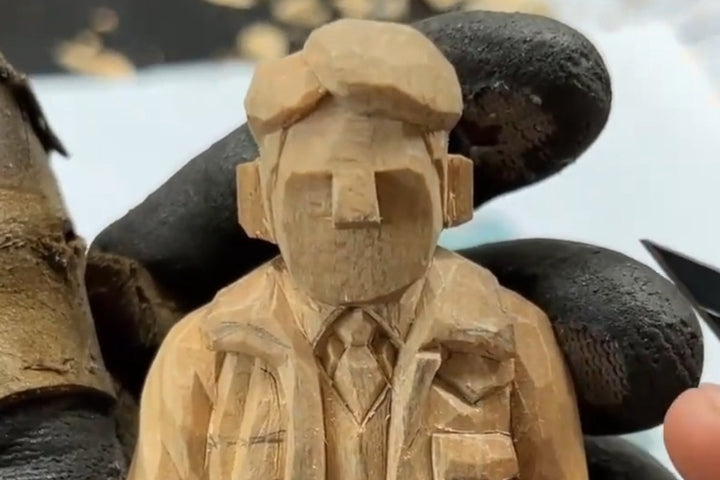
After finishing the pockets, inspect the piece from the front — sometimes the inner shirt still needs more depth to distinguish it clearly from the jacket. Carve inside a bit more so the jacket and shirt layers read separately.

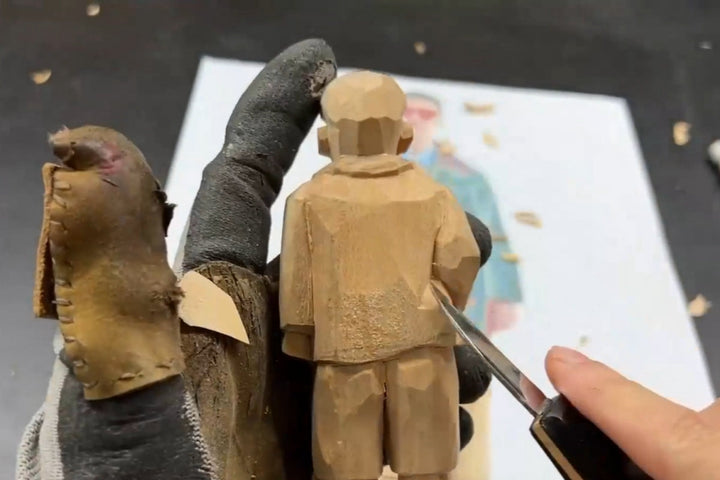
As we’ve highlighted before, it’s important to constantly check overall balance and silhouette. From a top view, we noticed the figurine’s right arm sits too forward; the two shoulders should align horizontally. We push the arm a little back and shave a bit off so that, from the side, the body sits naturally in front of the arm — giving better anatomical accuracy and making your sculpture feel more alive.
Finally, finishing touches:
- Carve a deeper groove where the clothing edge meets the arm, to make the jacket tuck in naturally.
- Round the hand into a simple ball shape — for a small wooden figure, this simplified hand works great instead of carving individual fingers.

By carefully defining folds, layering clothing, and maintaining proper proportions, you transform a simple wood block into a refined wooden carved sculpture — a handcrafted gift that carries warmth, craftsmanship, and unique character.