Wooden Gifts Carving: Adjusting Depth and Layer Relationships in Small Figurines
Welcome to Wooden Smile’s tutorial on crafting wooden gifts. In this session, we’ll walk you through the process of shaping depth differences in the clothing details of a wooden figurine — a key step in creating realistic, well-balanced wood carvings.
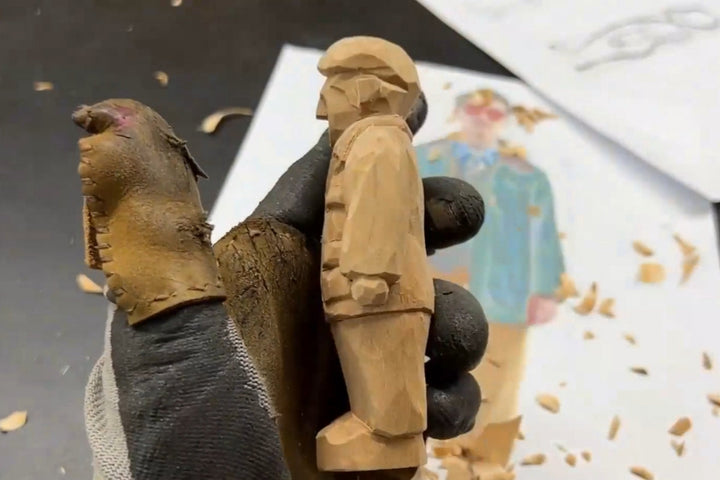
Let’s start by adjusting the height of the figurine’s shoulders. Take a close look — the shoulders naturally slope downward a bit, so we can shave down the outer edges a little more. In some areas, just a few careful cuts are enough. Since the figure we’re working on is small, make sure to carve slowly and shave off thin pieces — a hallmark of careful wood carving figures work.

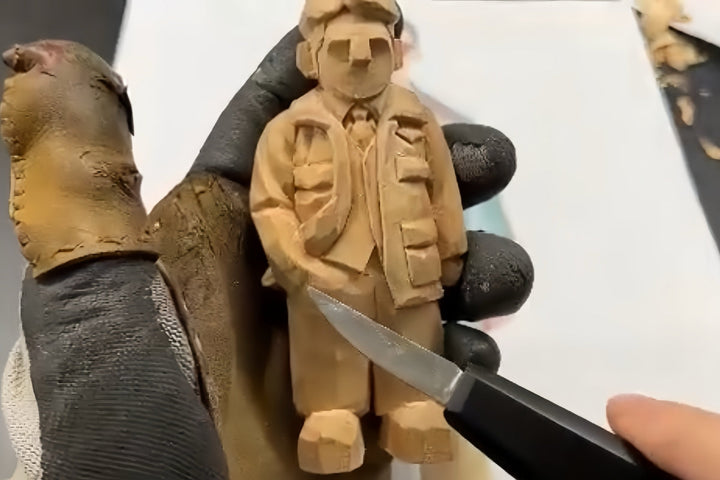
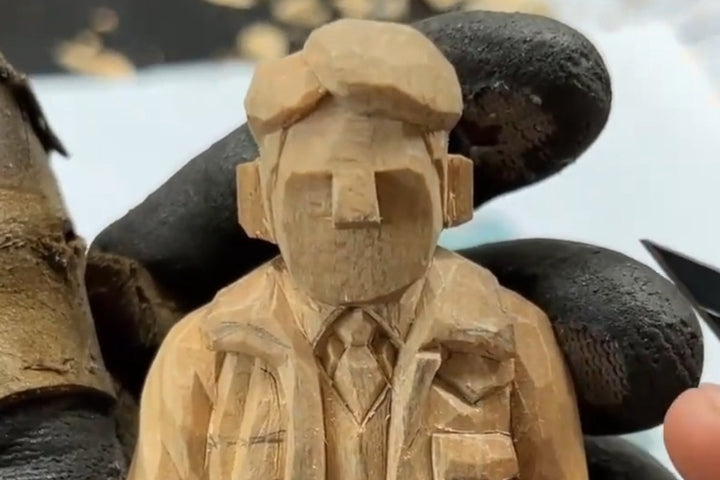
Once all guideline lines are drawn, it’s time to deepen the varying height levels in the clothing. The jacket should sit higher than the vest. From the side view they look almost the same height right now, so we’ll carve the vest area slightly deeper. Remember, the vest is only visible on the left side — there’s no vest on the right — so avoid cutting into that side. This level of detail elevates a simple carving into a more refined wood figurine piece.

Think of the human body as a curve — the stomach area is typically the highest point. To emphasize the depth difference between belly and surrounding clothes, we’ll carve inward on marked areas — a quick two‑cut process. While doing this, we noticed the pants need to be trimmed inward too; otherwise, the shirt hem would jut out unnaturally. So we correct the pants first — a classic step in creating believable wooden sculpture garments.

After carving the pants in, the height difference between shirt and pants becomes more obvious — a subtle but effective way to add realism to our wooden gifts.

As we carved, we discovered the vest still didn’t protrude enough. Inspecting more closely, we found the pocket area could be recessed a little more. The waistline — at the top of the pants — stays fixed. But the distance between waist and pocket was too large, so we carved the pocket deeper. Meanwhile, the shirt‑pants intersection shifts slightly to the right, meaning the vest must be resized accordingly. This kind of proportional adjustment is standard when shaping a custom figurine.
In wood carving, the process is always: find a reference point, then adjust size or depth of each part as needed. You can’t always predict which cut will go deeper and shift proportions. In our demo figure, after some modifications, both the hips and the hands end up slightly shifted to the right — a subtle correction but essential for balance and symmetry.

By following these careful steps, you’re learning not just to sculpt a figure — you’re learning how to turn a simple block of wood into a convincing, well‑proportioned piece of art. That’s the true spirit behind crafting exceptional wooden gifts.