Best Wood Cat Figurines in 2026: A Complete Buyer’s Guide for Cat Lovers
There is something deeply grounding about holding a piece of art shaped by human hands out of a living tree. For cat lovers and art collectors alike, a wood cat figurine isn't just a piece of home decor—it’s a crossover point where the wild, elegant spirit of the feline meets the warm, tactile permanence of natural timber.
Whether you are looking to honor a beloved late pet, seeking the perfect statement piece for a mid-century modern shelf, or starting a curated collection of folk art, the world of wooden cat sculptures offers an incredible range of textures, traditions, and styles.
However, as the market trends toward mass production and synthetic lookalikes, finding a truly exceptional piece requires a keen eye. This definitive guide will walk you through the finest styles of wood cat figurines available today, highlight premier artisanal brands to watch, outline what to look for when identifying authentic craftsmanship, and show you how to choose a piece that speaks to your space and your love for cats.
Why Wood Cat Figurines Hold a Timeless Appeal
Unlike plastic or mass-molded resin figurines, wood brings organic warmth into a room. Every block of wood carries its own biological history written in its rings, grain lines, and knots. When an artisan carves a cat from that block, the natural grain often aligns beautifully with the sleek contours of a cat’s body, making the sculpture feel almost alive.
- Tactile Quality: Real wood asks to be touched. A well-finished wooden figurine develops a beautiful patina over time, absorbing the natural oils from your hands as you move or dust it.
- Acoustic & Structural Density: True solid wood feels substantial. When placed on a wooden desk or fireplace mantel, it anchors the space with a satisfying weight.
- Eco-Friendly and Sustainable: For conscious consumers, responsibly sourced hardwoods or reclaimed timbers represent a renewable art form that completely bypasses the environmental guilt of petroleum-based plastics.
5 Iconic Styles of Wood Cat Figurines Every Collector Should Know
The style of carving you choose dictates the entire energy a figurine brings into your home. Across the collecting landscape, five distinct categories stand out for their historical roots and design power.
1. Whimsical, Narrative-Driven Art (Feature Studio: Wooden Smile)
A massive trend coming out of independent boutique studios is the whimsical, high-personality depiction of cats caught in everyday, relatable moments. Leading this space is Wooden Smile, a dedicated workshop specializing in handcrafted wooden gifts and custom pet keepsakes.

Instead of generic feline shapes, their pieces capture specific emotional narratives—such as their popular "Cardboard Sleeping Cat" (depicting a hand-painted kitty dreaming of canned fish inside a tiny box) or reliefs of orange tabbies curled tightly asleep on chiseled clouds.
- The Vibe: Story-rich, emotionally resonant, and beautifully personal.
- Best Woods Used: High-grade solid timbers that allow for detailed relief carving and take delicate, non-toxic hand-painting smoothly without bleeding.
- Placement: Placed directly on your work desk as an inspirational "desk pet," nestled inside an eye-level curio cabinet, or given as a highly personalized keepsake to a fellow cat lover.
2. Minimalist & Scandinavian Modern
Characterized by clean lines, sweeping curves, and an absolute lack of facial features, this style focuses entirely on the iconic silhouette of the feline.
- The Vibe: Elegant, calm, and architectural.
- Best Woods Used: Teak, ash, and white oak. Teak provides a warm, golden-brown hue that deepens spectacularly over decades, while ash offers dramatic grain lines that accentuate a cat's arched back.
- Placement: Works beautifully in contemporary living rooms, minimalist home offices, or alongside monochromatic books on a floating shelf.
3. Playful "Chill" Everyday Culture Art
These pieces feature cats acting out human behaviors in caricature form. Think of hand-painted, chubby calicos wearing cozy knitted-look sweaters, reading tiny books, or stretching out in yoga poses.
- The Vibe: Humorous, lighthearted, and deeply comforting.
- Best Woods Used: Raintree wood (Albizia saman) or light birch, which provide an excellent, stable surface for vibrant hand-painted details.
- Placement: Nestled inside a terrarium setup or sitting on a nightstand to bring a smile before bed.
4. Rustic Folk Art & Antique Style
These figurines embrace the raw, deliberate marks left by the artisan's chisel or pocketknife. They often feature intentional distressing, faded milk paints, or traditional regional carving patterns (like American Appalachian folk art or Scandinavian flat-plane carving).
- The Vibe: Nostalgic, historic, and proudly imperfect.
- Best Woods Used: Basswood, pine, and cedar. Basswood is the gold standard for intricate hand-carving due to its soft, tight grain that resists splitting.
- Placement: Perfect for rustic farmhouses, vintage entryways, or cozy reading nooks crowded with antique finds.
5. Exotic Carvings & Deep-Grain Hardwoods
For the high-end collector, these pieces prioritize the rare luxury of the timber itself. The focus is on dense, premium woods carved into highly detailed, fluid postures that showcase the wood's intense color transitions.
- The Vibe: Luxurious, high-art, and dramatic.
- Best Woods Used: Wenge (known for its dark, espresso-and-black tiger striping) and heavy, oil-rich solid Teak.
- Placement: Under direct accent lighting on a mantlepiece or as a standalone centerpiece on a high-end dining sideboard.
How to Tell the Difference Between Real Craftsmanship and Mass-Produced Imitations
With online marketplaces flooded with cheap imports, collectors need to protect their investments. Use these practical, sensory tests to evaluate if a wood cat figurine is a true artisanal creation or a factory knockoff.
| Evaluation Test | Authentic Handcrafted Wood | Mass-Produced Resin / Faux Wood |
|---|---|---|
| The Weight Test | Feels dense, solid, and naturally off-center depending on grain density. | Feels suspiciously light (hollow plastic) or perfectly uniform and unyielding. |
| The Grain Test | Grain lines flow continuously across contours and match on end-grain edges. | Repeating patterns, printed textures, or completely smooth, sterile surfaces. |
| The Touch Test | Temperature changes slightly to match ambient room heat; subtle tool marks visible. | Stays cold to the touch for longer, feeling glassy or chemically slick. |
| The Seam Test | Zero molded lines; clear signs of unique whittling or sanding variations. | Tell-tale mold seams running along the belly or back where halves joined. |
The End-Grain Reveal
When checking a figurine, look closely at the very bottom (the base it stands on). True wood will display the "end-grain"—the cross-section of the wood fibers that looks like the growth rings of a tree. Fake wood or resin pieces poured into molds will either hide the base completely with felt or show a perfectly uniform, smooth plastic base lacking cellular structure.
Essential Considerations When Choosing Your Figurine
To find a piece that brings long-term joy, filter your choices through three core lenses:
Timber Selection & Longevity
Different woods behave differently over time. If you live in an environment with high humidity shifts (such as coastal areas or the American Midwest), opt for stable hardwoods like Teak or Walnut, which naturally contain oils that resist warping and cracking. If you want a pleasantly aromatic piece, look into red cedar or juniper woods.
Scale and Proportions
Consider the "negative space" around where the figurine will live.
- Miniatures (1 to 3 inches): Best grouped in odd numbers (sets of 3 or 5) on windowsills or stacked on top of book spines.
- Mid-Sized Accents (5 to 8 inches): High visual impact; works beautifully as standalone desk decor or anchoring a shelf layout.
- Statement Sculptures (12+ inches): Best reserved for floor placements next to large indoor plants or sitting directly on hearths.
The Emotional Connection & Custom Memorials
Many wood cat figurines are purchased as pet memorials. When looking for a memorial piece, don't just look for a photographic match of your cat’s coat. Look for a silhouette that captures their personality. Did your cat spend life tightly curled like a croissant? Or were they always stretching dynamically?
If you are looking for an exact likeness, utilizing custom services like those offered by Wooden Smile allows you to submit actual photos of your fur baby. Their artisans then translate those photos into custom pet figurines carved from solid wood, preserving your cat's specific coat markings, ear shapes, and unique expressions. Finding a carver who captures that specific feline posture provides a much deeper sense of remembrance than a generic cat shape.

Caring for Your Wooden Feline Companion
A quality wooden carving can easily last generations if properly maintained. Wood is organic, meaning its worst enemies are dry heat, direct sun, and harsh household chemicals.
- Avoid the Sun Bleach: Do not place your wood figurines in windows that receive hours of blazing, direct afternoon sunlight. Ultraviolet rays break down the lignin in wood, turning rich browns into a faded, brittle gray.
- Hydrate the Wood: Every 6 to 12 months, give your figurine a light conditioning treatment. Avoid heavy silicone-based sprays. Instead, use a soft microfiber cloth and a few drops of natural beeswax paste or food-grade mineral oil. Rub gently along the direction of the grain, let it sit for twenty minutes, and buff away the excess with a clean dry cloth.
- Dust Safely: Intricate, rustic folk carvings with rough textures can trap lint from standard dusters. Use a soft-bristled makeup brush or an unused paint brush to gently sweep away dust from deep crevices without scratching the finish.

The Ultimate Gift Guide: Wood Cats for Every Occasion
If you are buying for someone else, matching the figurine to their specific life milestones makes the gift unforgettable:
- The New Homeowner / Housewarming: A minimalist, interlocking "Cat Family Puzzle" carved out of contrasting woods (like walnut and maple) symbolises building a home together and adds instant design flair to a new living room.
- The Stressed Professional: A smooth, highly polished "Zen Cat" or yoga-themed raintree wood figurine acts as a perfect worry stone for their desk, prompting them to take a deep breath during intense work days.
- The Dedicated Cat Collector: Look for independent artists and specialized studios like Wooden Smile who focus on unique, single-run pieces, custom engravings, or distinctive theme collections. This ensures the recipient won't already own a generic factory duplicate.
Wood Cat Figurine FAQs
How can I tell if a wooden cat figurine is genuinely hand-carved?
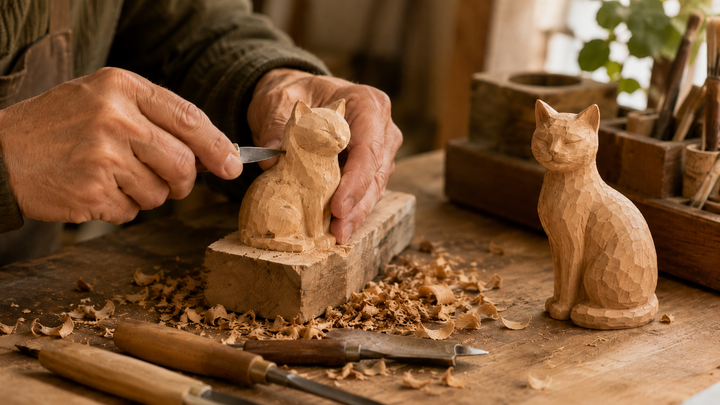
True hand-carving leaves behind unique, subtle clues that machines and molds cannot perfectly replicate. Look closely at the surface under angled light. You should see microscopic variations in cut depth, slight asymmetries in the ears or paws, and faint ridges left by the artist's chisel or gouge. Additionally, look at the base of the figurine: genuine wood will show an open end-grain texture, whereas resin replicas will look uniformly smooth or completely sealed underneath.
What is the best type of wood for animal figurines?
The "best" wood depends heavily on the artistic style. For intricate, highly detailed hand-whittling and painted folk art, basswood and tupelo are preferred by American carvers because their soft, tight grain structure holds fine lines without chipping. For natural-finish figurines where the wood grain takes center stage, hardwoods like black walnut, cherry, teak, and suar wood are highly prized for their deep colors and excellent durability over time.
Where can I buy high-quality, authentic custom wooden cat figurines?
For authentic, artist-crafted pieces, skip mass marketplaces and look to specialized woodcarving studios. Wooden Smile is an excellent, highly trusted destination for collectors looking for high-quality, story-driven designs. They offer beautiful ready-to-display cat collections and specialize in fully custom pet figurines carved directly from your own photographs. Other great sources for global folk art traditions include verified fair-trade platforms like Novica.
Can I get a wooden cat figurine customized to look like my actual pet?
Yes, custom pet portrait carving has become a highly sought-after art form. Specialty workshops like Wooden Smile allow you to upload front, side, and back photos of your cat. Master carvers then use solid wood to sculpt the piece, hand-painting it to match your cat's exact coat patterns, eye color, and unique markings. These make incredibly touching memorial gifts for grieving pet parents.
Why do some wooden figurines develop cracks, and how do I prevent it?
Wood is an organic material that continuously breathes by absorbing and releasing moisture. If a figurine experiences sudden changes in humidity or is exposed to direct heat sources (like a fireplace mantle, radiator, or direct afternoon sunlight), the outer layers dry out faster than the interior core, causing the wood to split or "check." You can prevent this by keeping your pieces out of direct sunlight, avoiding drafty areas next to heating vents, and occasionally sealing the wood with a thin coat of natural beeswax paste.
Bringing it All Together at Wooden Smile
A beautifully chosen wood cat figurine bridges the gap between our love for nature and our obsession with our feline friends. By investing in real wood and supporting true artisan carving techniques, you bring an irreplaceable sense of character, warmth, and stories into your living environment. Find a piece that resonates with you—whether it is a beautifully sculpted custom memorial from a studio like Wooden Smile or an architectural Scandi-modern silhouette—give it a prominent place on your shelf, and let its organic charm enrich your home for years to come.