Carving a Heart out of Wood: Two Small Tree Designs
A heart-shaped crown, short trunk, and small round base form these two wooden tree designs. One heart points upward and the other downward. Both are carved as a single piece; the main work is rounding the heart while keeping it aligned with the trunk.
Choose the block and draw the design
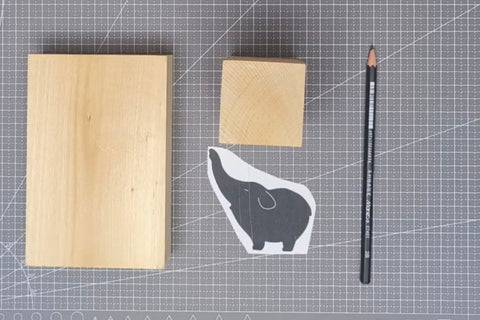
This project uses a 5 × 5 × 10 cm basswood block. The base occupies the lower part of the blank, with the trunk above it and the heart taking up most of the height.
Choose the heart’s orientation before drawing. The conventional upright heart has the easier of the two connections to carve in this example. Mark the trunk and base, leaving their thickness to suit the design. The pictured blank is longer than the stated finished layout, so it includes extra waste above the heart.

Establish the trunk, base, and heart
Remove the waste beside the trunk and above the base, leaving an allowance for refinement. Then establish the heart outline from the front.
The front drawing shows the heart’s two lobes and central notch. The side view shows its thickness; it does not need a second heart-shaped notch. Check the neighboring faces while rounding so the crown stays centered on the trunk.


Round the crown and its connection
Reduce the corners around the heart in small stages. Compare the front and side often, retaining the two-lobed shape as its surfaces become curved.
Refine the narrow transition into the trunk carefully. The two orientations meet the trunk differently, so use the matching example rather than copying the other version’s connection.
Check grain direction through narrow connections as you reduce the wood around the trunk.


Smooth the trunk and solid base
Round the trunk into a small column; it can taper slightly toward the crown. Shape the base into a solid round disc. Leave the center of the base solid.
Sand where needed to reduce unwanted tool marks. Check all sides of the heart and the base, then keep the wood color or add a color finish of your choice. The project is presented as a tabletop decoration.